AC Repair: What It Costs and When to Call a Pro
5 min read
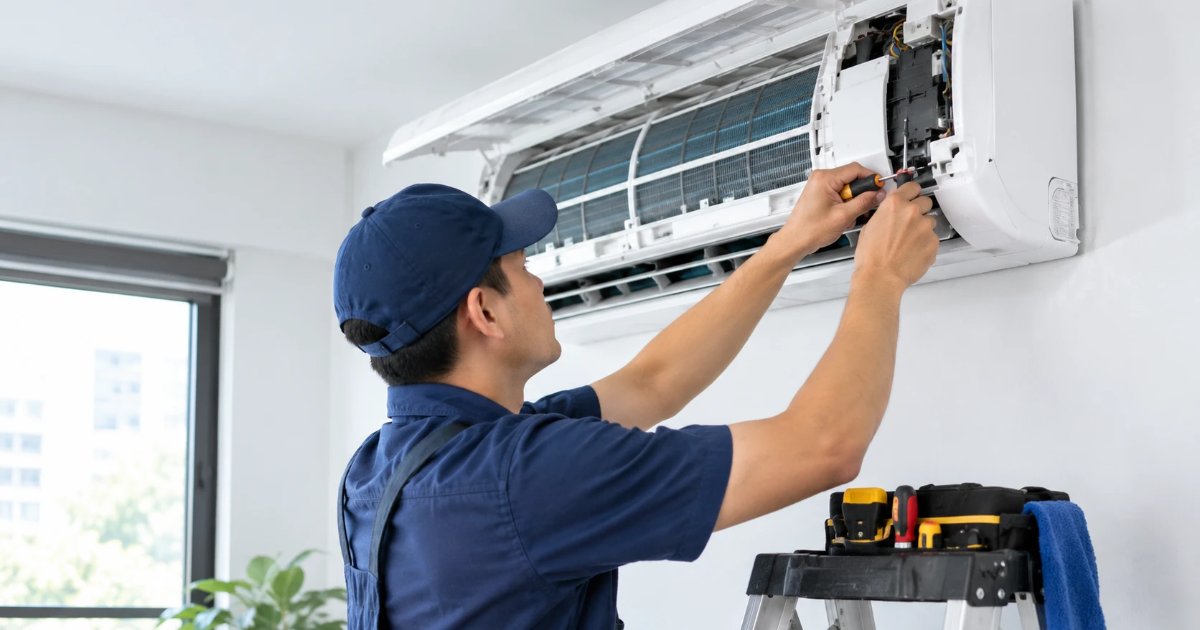
A failing air conditioner always seems to pick the hottest week of the year. Before you call the first number you find, it helps to know what is actually going wrong, what a fair price looks like, and which repairs are worth paying for versus when you are better off replacing the unit. This guide covers all of it in plain terms.
What AC repair usually means
Air conditioning is a chain of parts working together: a compressor, refrigerant, two sets of coils, a blower, and the electrical controls that tie them together. When people search for AC repair, the real problem is almost always one link in that chain, not the whole system. Pinning down which link is what separates a quick, affordable fix from an expensive guess.
The most common AC repairs
A handful of issues account for the large majority of service calls:
- Capacitor or contactor failure. These small electrical parts start and run the motors. When one fails, the unit often hums, clicks, or refuses to turn on at all. It is one of the cheapest and most common repairs.
- Low refrigerant from a leak. If the air coming out is weak or barely cool, the system may be low on refrigerant. The key detail many homeowners miss: refrigerant does not get used up. If it is low, there is a leak, and a good technician finds and seals it rather than simply refilling it.
- Frozen evaporator coil. A coil caked in ice usually traces back to a dirty filter, a blocked vent, or low airflow. The unit runs constantly but cools poorly.
- Clogged condensate drain. The drain line that carries away moisture can clog with algae and grime, which can trip a safety switch and shut the system down.
- Fan motor problems. If the outdoor unit runs but the fan does not spin, or spins slowly, the motor or its capacitor is often the culprit.
- Compressor failure. The compressor is the heart of the system and the most expensive part to replace. When it fails on an older unit, replacement often makes more sense than repair.
How much does AC repair cost?
Pricing depends on the part, your location, and how urgent the call is. Nationally, a typical AC repair runs around $350, but these approximate ranges set better expectations by job:
| Repair | Typical range |
|---|---|
| Service call / diagnostic fee | $75 to $200 |
| Capacitor replacement | $100 to $450 |
| Contactor replacement | $150 to $400 |
| Refrigerant leak repair and recharge | $200 to $1,600 |
| Condensate drain clearing | $100 to $250 |
| Fan motor replacement | $200 to $700 |
| Compressor replacement | $1,200 to $3,000 |
What moves the price
- Emergency and after-hours visits cost more than scheduled appointments.
- Older systems that use phased-out refrigerant are more expensive to recharge.
- Hard-to-source parts for certain brands can add to the bill.
- Ask whether the diagnostic fee is waived if you approve the repair. Many companies credit it toward the work.
Repair or replace? A simple rule
Two guidelines help you decide without overthinking it.
The age test. Most central AC units last 10 to 15 years. If yours is past 10 and needs a major repair, replacement is usually the smarter long-term money.
The cost test, sometimes called the $5,000 rule. Multiply the repair quote by the unit's age in years. If the result is more than roughly $5,000, lean toward replacing. A $1,500 compressor repair on a 3-year-old unit (4,500) is worth doing. The same repair on a 12-year-old unit (18,000) is not. Treat this as a rule of thumb, not a hard line, and weigh in energy savings and any rebates on a new system.
Also factor in how often it has been breaking down. A unit that has needed three repairs in two summers is telling you something.
Can you fix an AC yourself?
A few things are genuinely DIY: replacing a dirty filter, gently clearing debris from around the outdoor unit, and flushing a clogged drain line. These are also the best ways to prevent repairs in the first place.
Almost everything else is a job for a licensed pro. Anything involving refrigerant is regulated and requires EPA certification to handle legally. Anything involving the electrical components carries a real shock hazard. Opening up the system without training usually turns a small problem into a bigger one.
How to hire an AC repair company you can trust
This is where most of the money is won or lost. Before you book anyone:
- Confirm they are licensed and insured. HVAC work is licensed in most states. Ask for the license number and verify it.
- Get the diagnosis in writing. A trustworthy tech explains what failed and why, and shows you. Be wary of anyone who jumps straight to you need a whole new system without a clear diagnosis.
- Ask for an itemized quote. Parts and labor listed separately. Vague lump sums make overcharging easy to hide.
- Check recent reviews. Look for comments about honesty and whether the final price matched the quote, not just star ratings.
- Get a second opinion on big-ticket repairs. For anything over about $1,000, a second quote is worth the time.
How to avoid the next repair
Most breakdowns are preventable. Change the filter every one to three months, keep two feet of clearance around the outdoor unit, and book a professional tune-up once a year, ideally in spring before the cooling season starts. A routine tune-up routinely prevents a much larger repair bill.
Frequently asked questions
- How long does an AC repair take?
- Most common repairs, like a capacitor or a drain clog, are done in under two hours. Parts that have to be ordered, or compressor work, can take longer.
- Why is my AC running but not cooling?
- The usual suspects are low refrigerant from a leak, a frozen coil, or a dirty filter choking airflow. All three need to be checked by a technician if a filter change does not fix it.
- Is it worth repairing a 10-year-old AC?
- Sometimes. A small, inexpensive repair is usually worth it. A major repair on a unit that old often costs more over time than replacing it.
- How often should I service my AC?
- Once a year, in spring, plus a filter change every one to three months.