Drain Cleaning Cost: Snaking, Hydro Jetting & When You Need Each
6 min read
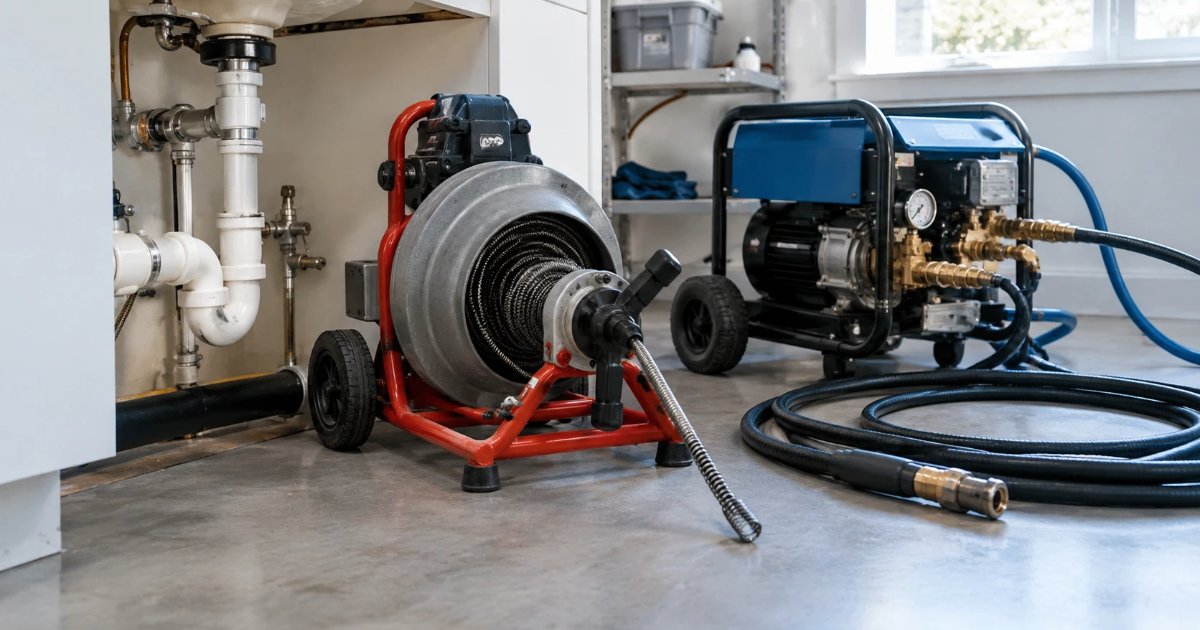
A slow or clogged drain is one of the most common reasons people call a plumber, and the price can swing from under a hundred dollars to several hundred depending on the method and the clog. The two main approaches, snaking and hydro jetting, solve different problems, and paying for the wrong one is how homeowners either waste money or end up calling back a month later. This guide explains both in plain terms, what each costs, and how to tell which one you need.
The two ways a pro clears a drain
Almost all professional drain cleaning comes down to two tools. A drain snake (also called an auger) is a long flexible cable that is fed down the pipe to break through or pull out a blockage. Hydro jetting uses a hose that blasts water through the pipe at high pressure to scour the walls clean. Snaking punches a path through a clog; jetting cleans the whole pipe. Knowing which your problem calls for is most of the battle.
Drain snaking: what it is and when it is enough
Snaking is the everyday fix. The cable is fed into the drain until it reaches the blockage, then spun to chew through it or hook it so it can be pulled out. It is fast, inexpensive, and safe for older or fragile pipes. For most single-drain problems it is all you need.
Snaking is usually the right call when:
- One sink, tub, or toilet is slow or blocked and the rest of the house drains fine.
- The clog is a one-time event, not something that keeps coming back.
- The blockage is close to the drain opening, such as hair or a soap plug.
- Your pipes are old or fragile, where high-pressure water could do harm.
Hydro jetting: what it is and when you need it
Hydro jetting sends water through the pipe at very high pressure through a special nozzle, cutting through buildup and flushing it away. Because it cleans the full inside wall of the pipe rather than just poking a hole through the clog, the results last much longer. It is the heavier tool, and it costs more.
Hydro jetting is worth it when:
- Clogs keep coming back in the same line no matter how often it is snaked.
- The problem is grease, sludge, or mineral buildup coating the pipe.
- Tree roots have grown into the sewer line.
- More than one drain is slow at once, which points to the main line, not a single fixture.
Which one do you actually need?
A simple rule: snake first for a single, isolated, one-time clog. Step up to hydro jetting when the problem is recurring, greasy, root-related, or in the main line. Snaking is cheaper and gentler; jetting is more thorough and longer-lasting but harder on weak pipes. Many plumbers will try a snake first and only recommend jetting if the clog comes back or a camera shows heavy buildup.
How much does drain cleaning cost?
Pricing depends on the method, where the clog is, and how hard it is to reach. These approximate national ranges set expectations:
| Service | Typical range |
|---|---|
| Snake a single drain (sink, tub, toilet) | $100 to $350 |
| Snake / auger a main sewer line | $150 to $600 |
| Hydro jetting | $350 to $900 |
| Sewer camera inspection | $200 to $500 |
What moves the price
- Clog location. A clog near the drain is cheap. One deep in the main line or under a slab costs more to reach.
- Severity. Heavy grease, roots, or a fully blocked line takes longer and sometimes needs jetting over snaking.
- Cleanout access. If there is an easy cleanout access point, the job is quicker. If the plumber has to pull a toilet or get on the roof, labor climbs.
- After-hours calls. A backed-up main line at night or on a weekend carries an emergency premium.
- Pipe length. A long main-line run (100 feet or more) raises the jetting price.
Why a camera inspection often comes first
For a recurring or main-line problem, a plumber may run a small waterproof camera down the pipe before quoting a fix. It shows exactly what and where the problem is, roots, a belly in the line, grease, or a cracked pipe, so you are not paying to guess. A camera inspection adds to the up-front cost but can save far more by targeting the right repair and by confirming whether the pipe is sound enough for hydro jetting in the first place.
Try this before you call
For a minor single-drain clog, a few safe steps may save you the service call: a flat plunger, a hand auger from the hardware store, or physically removing the drain stopper and clearing out hair. Hot water and a little dish soap can help with light grease in a kitchen drain. Skip the chemical drain cleaners. They are hard on pipes, often do not clear the real blockage, and create a hazard for the plumber who opens the line next. If the clog resists simple tools, or more than one drain is affected, it is time to call.
How to hire without getting upsold
Drain work is an easy place to be oversold. Protect yourself:
- Ask for the price before work starts. A flat rate or a clear hourly rate plus the method, in writing when possible.
- Be cautious if a plumber pushes hydro jetting or a full repair for a simple first-time clog. Snaking is usually the reasonable first step.
- Ask to see the camera footage if they recommend a big-ticket repair based on it.
- Confirm they are licensed and insured, and check recent reviews for comments about honest, upfront pricing.
- For anything over about $1,000, get a second quote.
How to prevent the next clog
Most clogs are avoidable. Keep grease, coffee grounds, and food scraps out of the kitchen drain, use strainers to catch hair and debris, and never flush anything but toilet paper. If you have had repeat main-line trouble from roots or grease, a periodic hydro jetting every couple of years keeps the line clear and heads off the emergency backup.
Frequently asked questions
- Is hydro jetting better than snaking?
- Not always. Snaking is cheaper, gentler, and fine for a simple one-time clog near the drain. Hydro jetting cleans the whole pipe and lasts longer, which makes it the better choice for recurring clogs, grease, or tree roots, but it can harm old or weak pipes.
- How much does it cost to snake a drain?
- Snaking a single drain typically runs about $100 to $350. Clearing a main sewer line costs more, usually around $150 to $600, depending on access and severity.
- Can hydro jetting damage pipes?
- It can, if the pipes are already old, corroded, or cracked. That is why plumbers often run a camera inspection first to confirm the line is in good enough shape to handle the pressure.
- How often should I have my drains cleaned?
- Only when there is a problem for most homes. But if you deal with recurring root or grease blockages in the main line, a preventative cleaning every couple of years can stop the next backup before it starts.