Furnace Repair, Explained: What's Wrong and What It'll Take to Fix It
6 min read
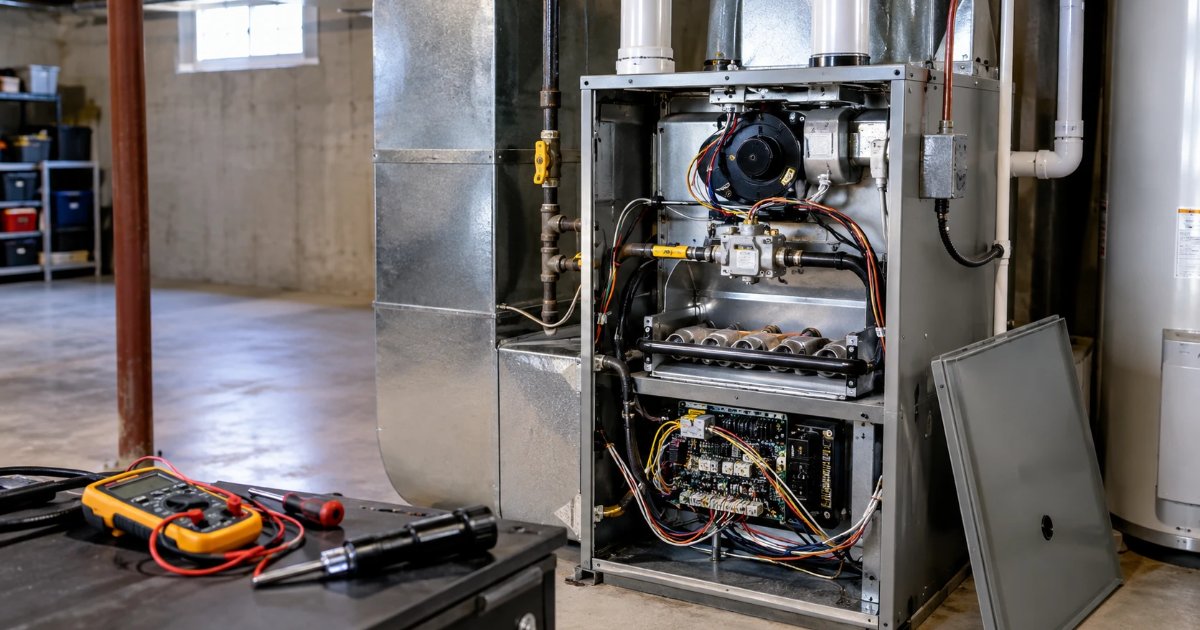
A furnace almost always quits on the coldest night of the year, and the scramble to get heat back makes it easy to overpay or get talked into more than you need. The good news is that most no-heat calls come down to a handful of parts, and many are inexpensive to fix. This guide walks through what usually goes wrong, what a fair price looks like, and when a repair stops making sense.
What furnace repair usually means
A furnace is a chain of parts that has to fire in the right order: the thermostat calls for heat, an igniter or sensor starts and proves the flame, the burners heat a metal heat exchanger, and a blower pushes warm air through your ducts. When any one link fails, the whole chain stops and you get cold air or nothing at all. Most repairs come down to finding which link broke, and the cheap failures are far more common than the expensive ones.
The most common furnace problems
A short list of issues accounts for most service calls:
- Dirty air filter. The most common and most overlooked problem. A clogged filter chokes airflow, which can overheat the furnace and make it shut off. Changing it is the first thing to check.
- Dirty or failed flame sensor. One of the single most frequent furnace faults. A grimy sensor lets the furnace light and then shut off seconds later, over and over. Cleaning or replacing it is usually cheap.
- Failed igniter. If the furnace never lights at all, a cracked or burned-out igniter is a likely cause. It is a common wear part.
- Thermostat problems. Wrong setting, dead batteries, or a miscalibrated thermostat can look like a dead furnace. Always rule this out first.
- Blower motor trouble. If the burners fire but no warm air moves, or the blower runs nonstop, the motor or its control may be failing.
- Short cycling. A furnace that turns on and off too quickly is often fighting a dirty filter, a blocked vent, or a thermostat placed in a bad spot.
- Cracked heat exchanger. The most serious problem. A crack can leak carbon monoxide and is a safety issue, not just a repair. On an older furnace this usually means replacement.
How much does furnace repair cost?
Pricing depends on the part, your location, and how urgent the call is. A typical furnace repair runs in the few-hundred-dollar range, often around $350, though simple fixes cost less and major parts cost much more. These approximate ranges set expectations by job:
| Repair | Typical range |
|---|---|
| Service call / diagnostic fee | $75 to $200 |
| Flame sensor cleaning or replacement | $75 to $250 |
| Igniter replacement | $120 to $400 |
| Blower motor replacement | $300 to $1,000 |
| Control board replacement | $300 to $700 |
| Heat exchanger replacement | $1,000 to $3,000 |
What moves the price
- Emergency and after-hours visits during a cold snap cost more than a scheduled appointment.
- High-efficiency and variable-speed furnaces use pricier parts, especially ECM blower motors.
- Hard-to-source or older parts add to the bill and the wait.
- Ask whether the diagnostic fee is credited toward the repair if you approve the work. Many companies apply it.
Repair or replace?
A few guidelines help you decide without agonizing over it.
The age test. Most gas furnaces last about 15 to 20 years. If yours is past 15 and needs a major repair, replacement is usually the smarter long-term money.
The 50 percent rule. If a repair would cost half or more of a comparable new furnace and the unit is near the end of its life, lean toward replacing. A cheap fix on a newer furnace is almost always worth it.
The pattern. Three or more repairs in two winters, or heating bills creeping up despite normal weather, are signs the system is in decline.
The safety exception. A cracked heat exchanger or a carbon monoxide alarm changes the math entirely. That is a safety problem, and on most older furnaces it points to replacement rather than repair.
Can you fix a furnace yourself?
A few things are genuinely DIY and prevent most breakdowns: replacing a dirty filter, confirming the thermostat is set to heat with fresh batteries, checking that the breaker and the furnace power switch are on, and making sure vents and returns are not blocked. A surprising share of no-heat calls are solved by one of these.
Almost everything else belongs to a licensed pro. Anything involving gas, combustion, or the electrical components carries real risk. If you smell gas or a carbon monoxide alarm goes off, leave the house and call your gas utility or 911 first, then an HVAC pro. Do not try to diagnose that yourself.
How to hire a furnace repair company you can trust
Cold-weather urgency is exactly when overcharging is easiest. Before you book:
- Confirm they are licensed and insured. HVAC work is licensed in most states. Ask for the number and verify it.
- Get the diagnosis explained. A trustworthy tech shows you what failed and why. Be wary of anyone who jumps straight to you need a whole new furnace without a clear reason.
- Ask for an itemized quote with parts and labor listed separately, not a vague lump sum.
- Check recent reviews for comments about honest pricing and whether the final bill matched the quote.
- For any big-ticket repair, or if you are told the heat exchanger is cracked, get a second opinion before spending.
How to avoid the next breakdown
Most furnace failures are preventable. Change the filter every one to three months through the heating season, keep vents and returns clear, and book a professional tune-up once a year, ideally in fall before the first cold snap. A yearly tune-up catches a dirty sensor or a worn igniter before it leaves you without heat, and it is far cheaper than an emergency call.
Frequently asked questions
- Why is my furnace blowing cold air or running with no heat?
- Common causes are a dirty flame sensor (the furnace lights then shuts off), a failed igniter, a clogged filter, or a thermostat set wrong. Check the filter and thermostat first; if that does not fix it, it needs a technician.
- How much does it cost to replace a furnace igniter?
- A furnace igniter typically runs about $120 to $400 installed, depending on the part and labor. A dirty flame sensor, which causes similar symptoms, is usually cheaper at around $75 to $250.
- How long does a furnace last?
- Most gas furnaces last about 15 to 20 years with proper maintenance. Electric furnaces often last longer. Past 15 years, a major repair is usually the point to weigh replacement.
- Is a cracked heat exchanger worth repairing?
- Rarely. A cracked heat exchanger is a carbon monoxide safety hazard, and on most older furnaces the cost pushes you toward replacing the unit rather than repairing it. Get a second opinion before deciding.