Roofing Storm Chasers and Scams, How to Avoid Getting Burned
6 min read
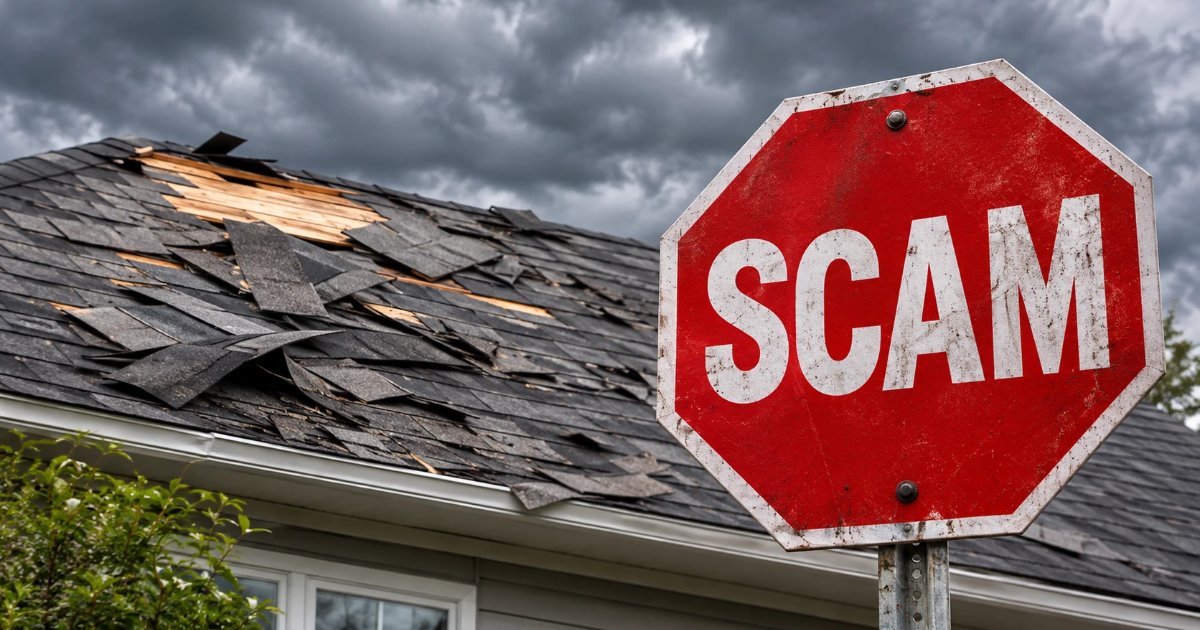
The knock on the door usually comes a day or two after a big hailstorm. A friendly crew says they were working in the neighborhood, noticed damage on your roof, and can start right away. Some are legitimate. Many are storm chasers, out-of-town operators who follow bad weather, sign up as many roofs as they can, and are gone before the problems show up. This guide explains how the scams work, the red flags that give them away, and how to hire a roofer you can actually trust.
What a storm chaser is
A storm chaser is a roofing operation that travels from city to city following hail and wind storms. They flood a neighborhood right after the weather, knock on doors, push homeowners to sign fast, do the work quickly, and move on to the next storm. The honest ones exist, but the model attracts bad actors: because they are not local, there is no reputation to protect and no one to call when a cheap roof starts leaking two years later. The warranty is only as good as a company that is still around to honor it.
The most common roofing scams
Most roofing scams are a variation on a few plays:
- The unsolicited door knock. Someone shows up uninvited after a storm claiming they already spotted damage on your roof. A contractor you did not seek out is the single most common warning sign.
- The free inspection. A legitimate roof inspection has value and is rarely truly free. A pushy free inspection is often a setup to find, or secretly create, damage that is not really there.
- Manufactured damage. The worst actors cause damage on purpose while they are up on your roof so there is something to bill for or claim. Never let a stranger onto your roof unsupervised.
- The deductible offer. If a contractor offers to waive, cover, or eat your insurance deductible, treat it as a stop sign. It is a red flag, it is insurance fraud, and in many states it is against the law. More on this below.
- The big upfront payment. Demanding a large cash deposit before any work starts is how disappearing crews disappear. Honest roofers do not need most of the money up front.
- The lowball bid. A quote far below everyone else is not a deal. It usually means cheap materials, cut corners, or a crew that will vanish before the job is finished.
- The high-pressure close. This price is only good today. Sign now before another storm. Real roofers let you think it over and get other quotes.
The deductible trap
One pitch deserves its own warning because it sounds like a favor and is actually a trap. When a roofer offers to waive your insurance deductible or says you will pay nothing out of pocket, here is what is really happening: they bill your insurer one amount and collect a different amount from you, and the deductible you were supposed to pay simply vanishes on paper. That is insurance fraud, and it can put you on the hook, not just the contractor.
Many states have made this explicitly illegal. By one industry count at least 28 states have laws against waiving or rebating a homeowner's deductible, and some carry criminal penalties. In Texas, for example, a 2019 law made it a crime for a roofer to pay, waive, or absorb your deductible. The simple rule: if someone promises to make your deductible disappear, walk away.
Red flags in 30 seconds
- No local address. A P.O. box, an out-of-state plate, or no verifiable local office.
- No license or insurance they can prove on the spot. Ask for both and verify them.
- Vague or blank paperwork. Never sign a contract with blank spaces or no clear scope and price.
- They want to run your insurance claim and have you sign over control of it.
- Urgency and cash. Push to sign today, pay a big deposit, preferably in cash.
How to protect yourself
A few habits keep almost all of these scams off your roof:
- Find the roofer yourself. The best defense is to choose a contractor you sought out, not one who knocked on your door.
- Hire local and established. A company with a real local office and a track record will still be there when a warranty question comes up.
- Verify license and insurance. Ask for the numbers and confirm they are current before anyone climbs up.
- Get two or three written estimates. Compare scope and materials, not just the bottom line. Be suspicious of a bid far below the rest.
- Never pay large sums up front. A modest deposit can be normal, but most of the money is due as work is done, and get a payment schedule in writing.
- Handle your own insurance claim. Talk to your insurer directly. Do not sign over control of the claim to a contractor.
- Get everything in writing and keep copies of estimates, the contract, photos, and any claim documents.
- Do not sign on the spot. A trustworthy roofer is fine with you taking a day to decide.
What to do if you already signed
If you signed something at your door and have second thoughts, act fast. For sales made at your home you often have a short window to cancel in writing, so check your contract, your state consumer-protection office, and the FTC for the current cancellation rules. If you suspect a scam or fraud, report it to your state attorney general, your local Better Business Bureau, and, if damage was done, the police. Tell your insurance company too, especially if a deductible or claim is involved.
How to hire a roofer you can trust
When you are ready to hire for real, the checklist is short:
- Licensed and insured, verified, not just claimed.
- Local and reviewed, with a real address and recent reviews you can read.
- An itemized written quote, with materials, scope, and a payment schedule spelled out.
- A real warranty from a company likely to still be in business to honor it.
- No pressure, no deductible games, no demand for cash up front.
Frequently asked questions
- Should I hire a roofer who knocks on my door after a storm?
- Be very cautious. An unsolicited door knock right after a storm is the most common storm-chaser tactic. If the pitch interests you, take their information, then independently verify their license, insurance, local address, and reviews before signing anything.
- Is it illegal for a roofer to waive my insurance deductible?
- In many states, yes. By one industry count at least 28 states have laws against waiving or rebating a homeowner's deductible, and some, like Texas, make it a crime. Everywhere it is a red flag and amounts to insurance fraud, so decline the offer and find another roofer.
- Are roof inspections really free?
- A thorough inspection has real value and is rarely truly free. A pushy free inspection after a storm is often a way to find, or secretly create, damage that is not there. Hiring your own inspector or an established local roofer is safer.
- What should I do if I think I have been scammed?
- Act quickly. Check whether you can still cancel the contract in writing, then report it to your state attorney general, the Better Business Bureau, and the police if damage was done. Contact your insurer too if a claim or deductible is involved.