Swamp Cooler Not Cooling? Common Problems and Fixes
6 min read
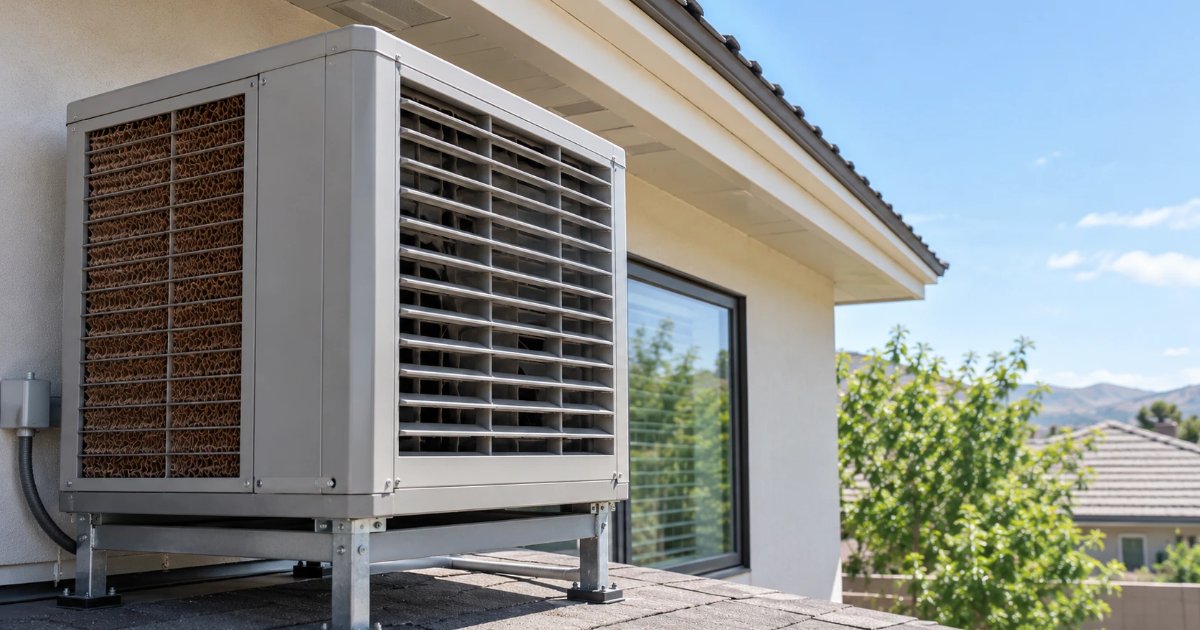
When a swamp cooler stops cooling, it is usually one small part of a simple system that has stopped doing its job. Evaporative coolers have far fewer parts than a refrigerant air conditioner, which is good news: most problems are cheap and quick to fix once you know what to look for. This guide walks through the common causes in plain terms, what each costs, and which ones are worth a call to a pro.
How a swamp cooler actually cools (so the fixes make sense)
An evaporative cooler works on one idea: dry air blown across wet pads picks up moisture and drops in temperature. A small pump lifts water from a tray at the bottom up to the pads, the pads stay soaked, and a blower pulls outside air through them and into your home. That is the whole chain. Nearly every cooling problem is a break somewhere in it: the pads are not getting wet, the air is not moving, or the air is too humid to cool in the first place.
First, rule out the two things that are not broken
Before you touch a tool, rule out the two most common reasons a working cooler seems to stop cooling:
- The air is too humid. Evaporative coolers only cool well in dry air. On a humid or monsoon day, the same unit that chilled your house last week will feel weak. That is physics, not a fault.
- Your windows are closed. A swamp cooler pushes a large volume of air in, and that air has to go somewhere. Crack windows open a few inches on the far side of the house so air can flow through. With the house sealed up, the cooler just pressurizes the rooms and cooling stalls.
The pads are dry (no water is reaching them)
If the blower runs but the air is not cool, check whether the pads are actually wet. Dry pads are the single most common cause. Usual culprits:
- Failed water pump. The small submersible pump in the tray burns out over time. If you hear the blower but no water is being lifted, the pump is the prime suspect.
- Clogged distribution lines. The thin tubes that drip water across the top of the pads clog with mineral scale and sediment. Clear or replace them.
- Stuck float valve. The float controls the water level in the tray. If it sticks closed, the tray runs dry. If it sticks open, water overflows.
- Water supply off. Check that the bleed line and the water supply valve to the cooler are actually open, especially right after winter.
Weak or no airflow
If the air is barely moving, the problem is on the blower side:
- Loose or broken drive belt. Many coolers use a belt between the motor and the blower. A loose belt slips and a broken one stops the blower entirely. Belts are a cheap, common replacement.
- Dirty blower wheel or clogged pads. Caked pads and a dust-packed blower choke airflow. Replacing pads and cleaning the blower often restores it.
- Failing motor. If the motor hums, trips a breaker, or will not start, it may be worn out or its bearings may be seized. This is more of a pro job.
Pads are wet but the air still is not cold
If water is reaching the pads but cooling is weak, the pads themselves are usually the issue. Pads break down, clog with dust, and cake with hard-water minerals, which stops them from soaking up water evenly. Replacing old pads is one of the most effective fixes and is easy to do yourself. In hard-water areas, a bleed-off or purge kit that flushes mineral-heavy water keeps new pads from scaling up as fast.
Musty or bad smell
A swamp cooler that smells is almost always a sign of standing water and old pads. Water that sits in the tray grows algae and bacteria, and old pads hold onto it. Drain and clean the tray, scrub out buildup, replace the pads, and use an evaporative cooler treatment tablet to keep the water fresh. A cooler that is cleaned at the start of each season rarely smells.
Leaking or water pooling
Water where it should not be usually traces to one of these:
- Float valve stuck open, which lets the tray overfill and spill. Adjust or replace it.
- Cracked or disconnected water line feeding the unit.
- A corroded or rusted-through tray. On an older unit, a rusted pan can mean it is near the end of its life.
What it costs to fix
Evaporative cooler repairs are generally inexpensive. These approximate national ranges set expectations:
| Repair | Typical range |
|---|---|
| General repair / service call | $60 to $600 |
| Cooler pad replacement (pro) | $65 to $115 |
| Water pump replacement | $150 to $450 |
| Full unit replacement | $1,500 to $3,500 |
What you can DIY vs. when to call a pro
Plenty of swamp cooler work is genuinely do-it-yourself: replacing pads, swapping a drive belt, cleaning the tray, adjusting the float, and clearing the water lines. These also double as the seasonal maintenance that prevents breakdowns.
Call a pro for a failed or noisy motor, anything electrical, a rusted-out tray, or leaks and cooling problems that keep coming back after you have done the basics. Rooftop coolers in particular are safer left to someone with the right ladder and footing.
Keep it from happening again
Most swamp cooler failures are maintenance that got skipped. Do a startup service each spring: new pads, a cleaned tray, a checked belt, and a test run. Clean the tray through the season, add a treatment tablet to keep water fresh, and fit a bleed-off kit if you have hard water. At the end of summer, drain it, dry it out, and cover it for winter so it is ready to go next year.
Frequently asked questions
- Why is my swamp cooler blowing warm air?
- The most common causes are dry pads (a failed pump, clogged lines, or a stuck float), air that is too humid to cool, or closed windows that stop airflow. Check that the pads are wet and crack some windows first.
- Do I need to open windows with a swamp cooler?
- Yes. A swamp cooler pushes a lot of air into the house, and it needs an escape path. Open windows a few inches on the far side of the house so air can flow through, or cooling will stall.
- Why does my swamp cooler smell musty?
- Standing water in the tray and old pads grow algae and bacteria. Drain and clean the tray, replace the pads, and use an evaporative cooler treatment tablet to keep the water fresh.
- How often should I replace the cooler pads?
- Thin fiber pads usually last about one cooling season, while rigid or corrugated media can last several years. Replace them when they are clogged, caked with minerals, or no longer cooling well.